The need for elderly care in Sweden is increasing as the population ages. At the same time, both healthcare and elderly care face major challenges with staff shortages, increased care needs, and higher demands for quality.
And the development has only just begun. Today, just over six percent of the population is 80 years or older, and according to SCB, the proportion is expected to reach eleven percent by 2070. The fastest change is happening now. Over the next ten years, the number of people over 85 is expected to increase by 179,000, from 304,000 to 483,000. The explanation is that the large cohorts from the 1940s will turn 85 in the coming years. This is the age group with the greatest need for care and support.
For those working with IT in healthcare and elderly care, it is therefore easy to see that the challenges of elderly care are not just about staffing. It is equally about the technology the staff can rely on, today and in ten years.
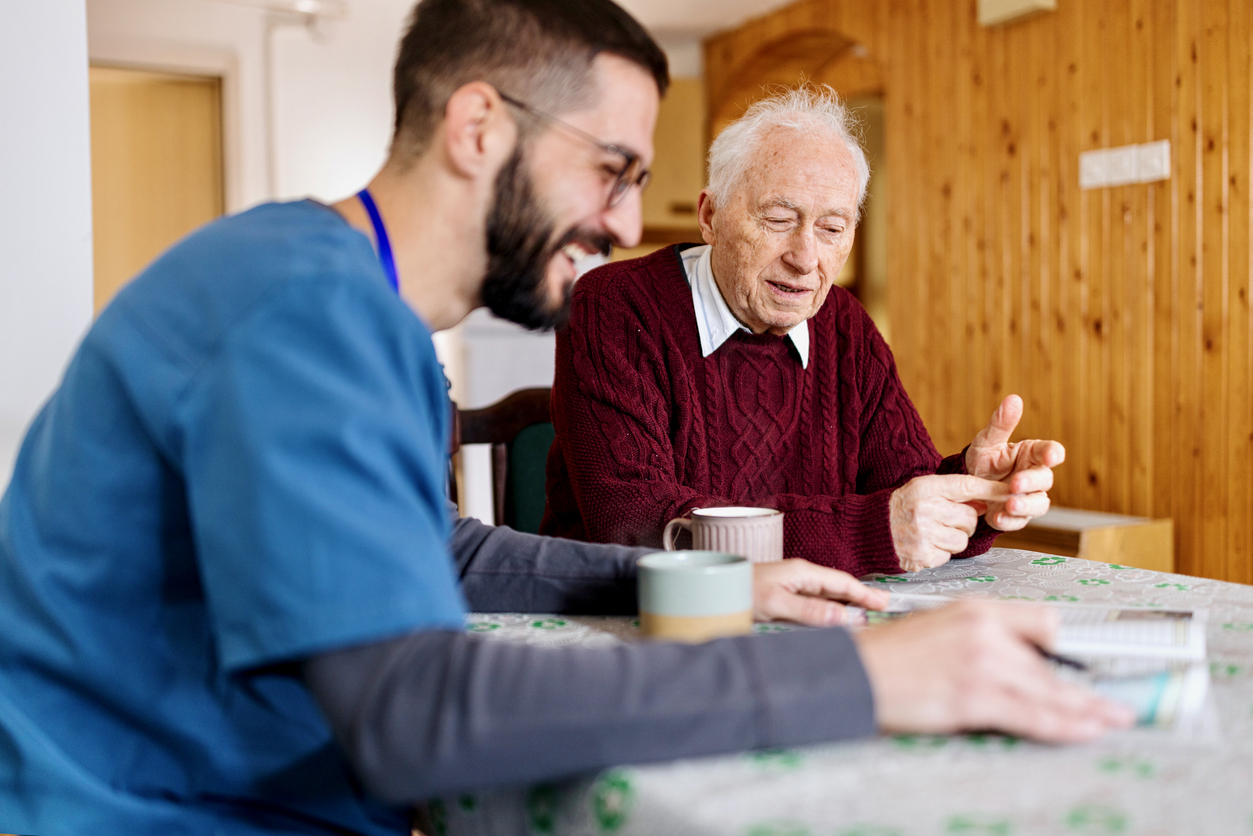
Many municipalities, regions and healthcare providers already recognise this picture. Staff are insufficient, and a large part of the working day is spent on documentation and administration instead of on the people healthcare is intended for. Communication with residents and relatives takes time, and older IT systems often make the work harder rather than easier. Added to that are the demands for GDPR compliance, information security and high availability, where healthcare has less margin than almost any other sector.
The challenge also looks different depending on the operation. In elderly care homes it often concerns information, entertainment and contact with the family. In hospitals the focus is on clinical workflows. In home care, where more elderly want to remain living at home longer, cooperation between care actors and the number of home visits are crucial.
With more elderly ahead of us, the equation only gets harder. More resources solve part of the problem. The other part is about using the resources that exist smarter, and building for a need that grows.
As the proportion of elderly people increases, so do the demands on what healthcare needs to manage. Three needs stand out: accessible healthcare, effective communication, and high quality care.
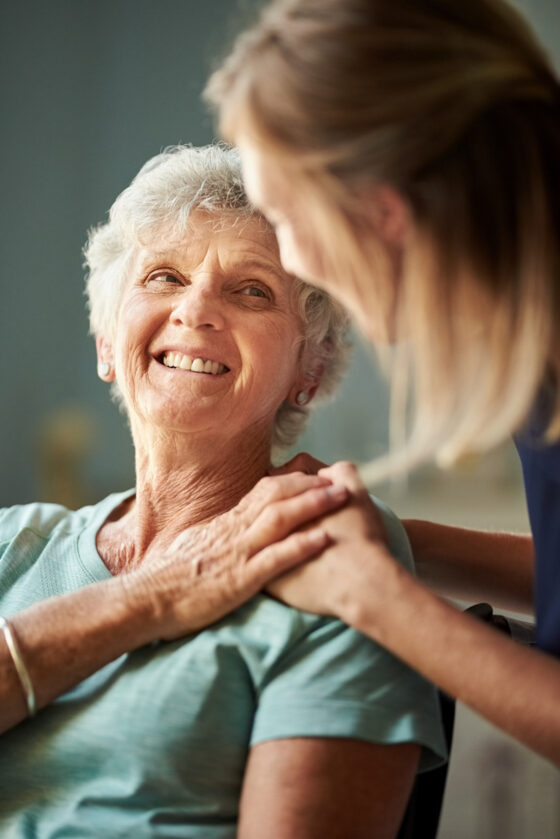
Accessible care - Older people often have regular contact with both primary care and specialist care, and then short waiting times and simple contact routes become crucial. This requires systems that operate around the clock and are easy to use even for those who are not accustomed to technology.
Effective communication - Patients, relatives, care staff and healthcare providers need to be able to share information smoothly, but also securely. The more people involved around each care recipient, the more important it becomes that the information reaches the right place.
High quality of care - Older people should be able to feel confident in receiving the right care, at the right time and in the right place. This assumes that the technology in the background is reliable, so that the staff can focus on what is happening in the room.
Step 1. Map out what takes time
Start with the staff's everyday routine. Which tasks take the most time: documentation, recurring questions, or information transfer between parties? Pay special attention to what grows in line with the number of care recipients, because that is what becomes unsustainable as the demand increases.
Step 2. Digitise where it frees up time
Technology should not replace human contact, but create more room for it. When more elderly people are to be cared for by relatively fewer employees, every freed-up minute becomes valuable.
Step 3. Create better communication
More care recipients mean more relatives, more questions and more points of contact. When residents, relatives and staff get the right information directly, both misunderstandings and interruptions in work decrease.
Step 4. Build on a secure technical foundation
Healthcare handles sensitive personal data and cannot afford downtime. Specify where the data is stored, which legislation the provider is subject to, how operations are secured around the clock, and how easily it can scale up as the need grows. Also ask how many providers the whole requires, as each integration is a potential weak link.
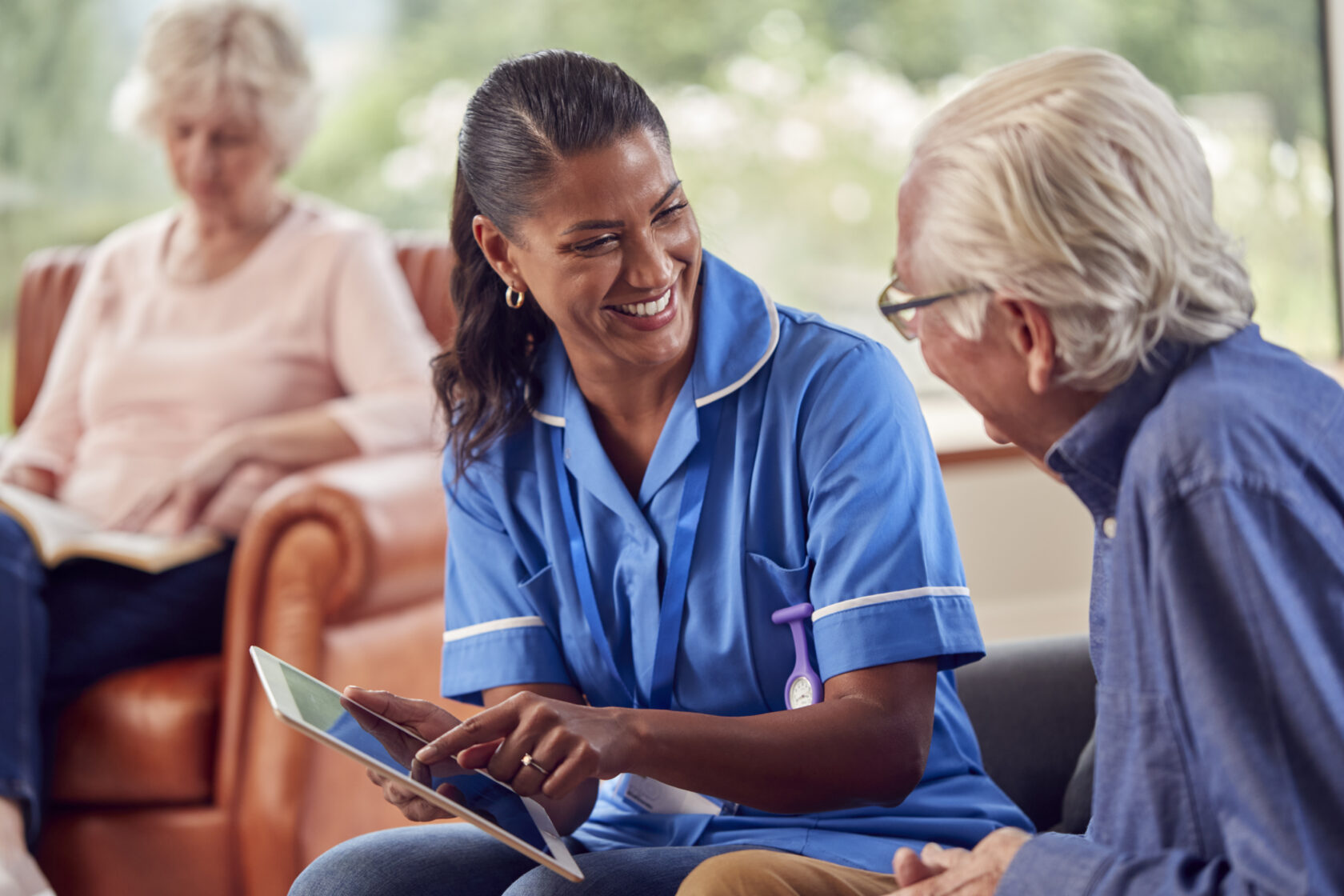
This is exactly the whole that Binero and Hibox work with. Hibox is part of Binero, which means that the same partner can be responsible for the entire chain, from Swedish-hosted cloud platform and managed IT operations to TV, communication and digital services at the residence. Binero is certified according to ISO 27001 and ISO 9001.
Out at the residence, this means that residents can watch TV, enjoy entertainment and make video calls with relatives directly from their room, privately and protected against fraud. Requests at the bedside are registered and prioritised without interrupting care, and all screens in the building are controlled centrally from the browser. In home care, connected TVs in the home can reduce the number of time-consuming home visits. For the staff, there are fewer interruptions and less administration, and more time with the residents.
An older population is not a problem to be solved, but a reality that healthcare needs to be prepared for. The future of elderly care is determined not only by how many work in it, but by how well the technology supports those who do.
We are driven by helping our customers achieve greater innovation and cost-efficient IT. Talk to one of our experts and we will gladly tell you more.