Healthy ageing is about more than medical treatment. For people living in elderly care, nursing homes and senior living communities, physical activity, social connection, meaningful participation and independence all contribute to everyday wellbeing.
Healthy ageing in elderly care means helping residents maintain their physical and mental capacities, participate in daily life and preserve their ability to do what matters to them. Care providers can support this by creating environments that encourage movement, facilitate relationships, provide accessible information and offer meaningful choices. The World Health Organization (WHO) defines healthy ageing as developing and maintaining the functional ability that enables wellbeing in older age. This includes a person's physical and mental capacities, the environment in which they live and the interaction between them.
WHO: Healthy Ageing and Person-Centred Care
For elderly-care providers, this means looking beyond scheduled appointments and clinical interventions. The everyday environment also matters: whether residents can find out what is happening, participate in activities, maintain contact with family and make choices about how they spend their time.
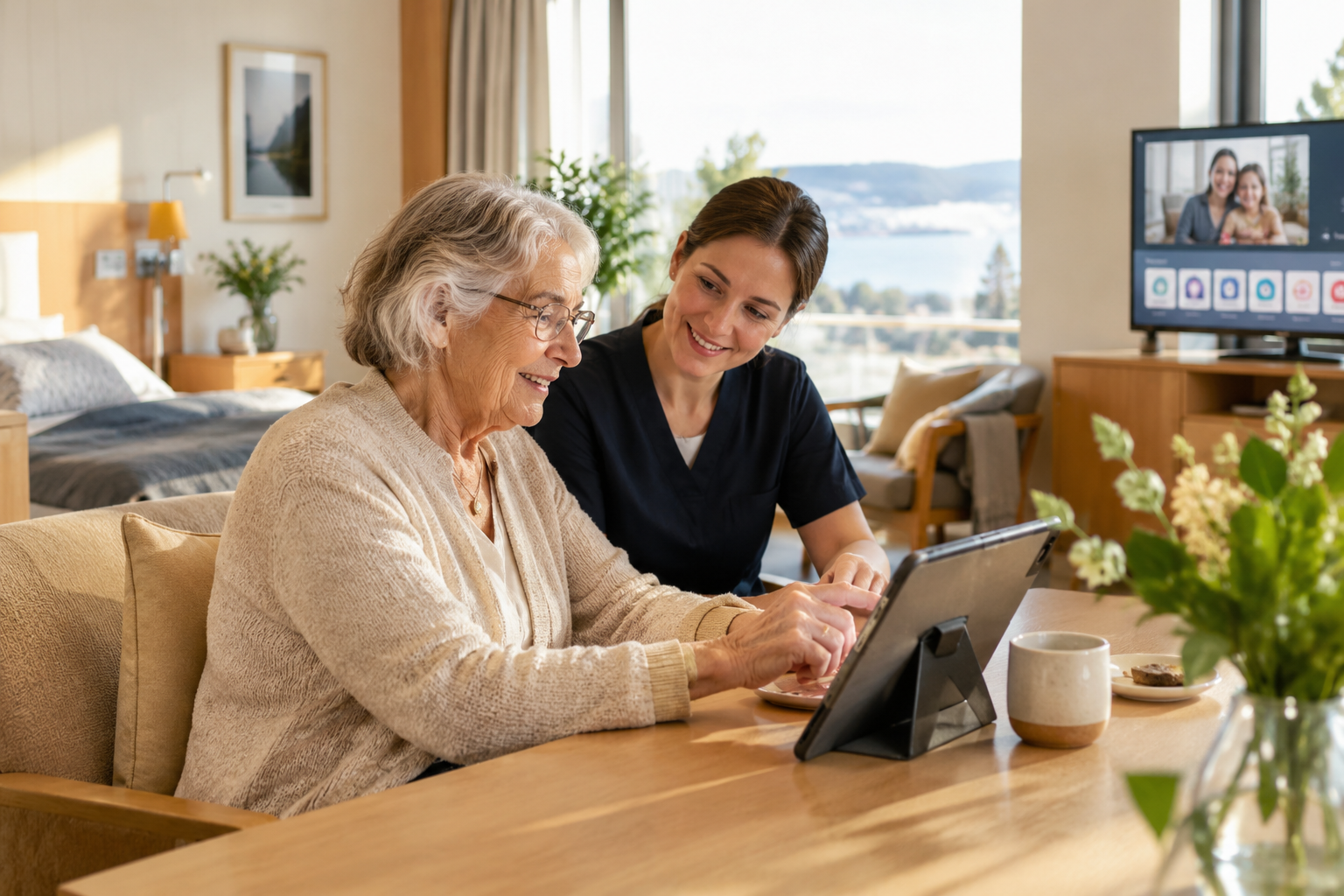
Healthy ageing focuses on maintaining functional ability, wellbeing and independence rather than simply the absence of illness. In residential care, this means supporting each resident according to their individual needs, health conditions, preferences and capabilities.
The WHO's European report on physical activity, nutrition and healthy ageing highlights how physical activity and nutrition contribute to functional ability, mobility and independence in later life. These are not only clinical concerns; they are also part of how people experience everyday life.
Care providers cannot control every factor affecting a resident's health, but they can help create an environment that supports physical activity, social connection, participation and personal choice. This is where resident engagement becomes important.
Physical activity is an important part of healthy ageing. The WHO explains that movement can include walking, dancing, household tasks, exercise and other activities that use energy. For older adults with reduced mobility, activities that support balance and help prevent falls are also important. The appropriate level of activity depends on each person's abilities and health conditions. See the WHO guidance on physical activity and older adults.
In residential care, opportunities for movement should fit into residents' daily routines and individual care plans. A group exercise session may suit one resident, while another may benefit from supported walking, gentle movement or an activity that encourages participation.
The challenge is not just providing suitable activities. Residents also need to know what is available and feel able to take part. A schedule displayed in a common area may reach residents who regularly pass it, but it may not reach those who spend more time in their rooms or need information presented differently.
Digital information displays and in-room screens can make activity schedules, reminders and wellbeing information easier to access. They do not replace suitable exercise programmes, professional guidance or staff encouragement, but they can help residents discover and participate in activities that already exist.
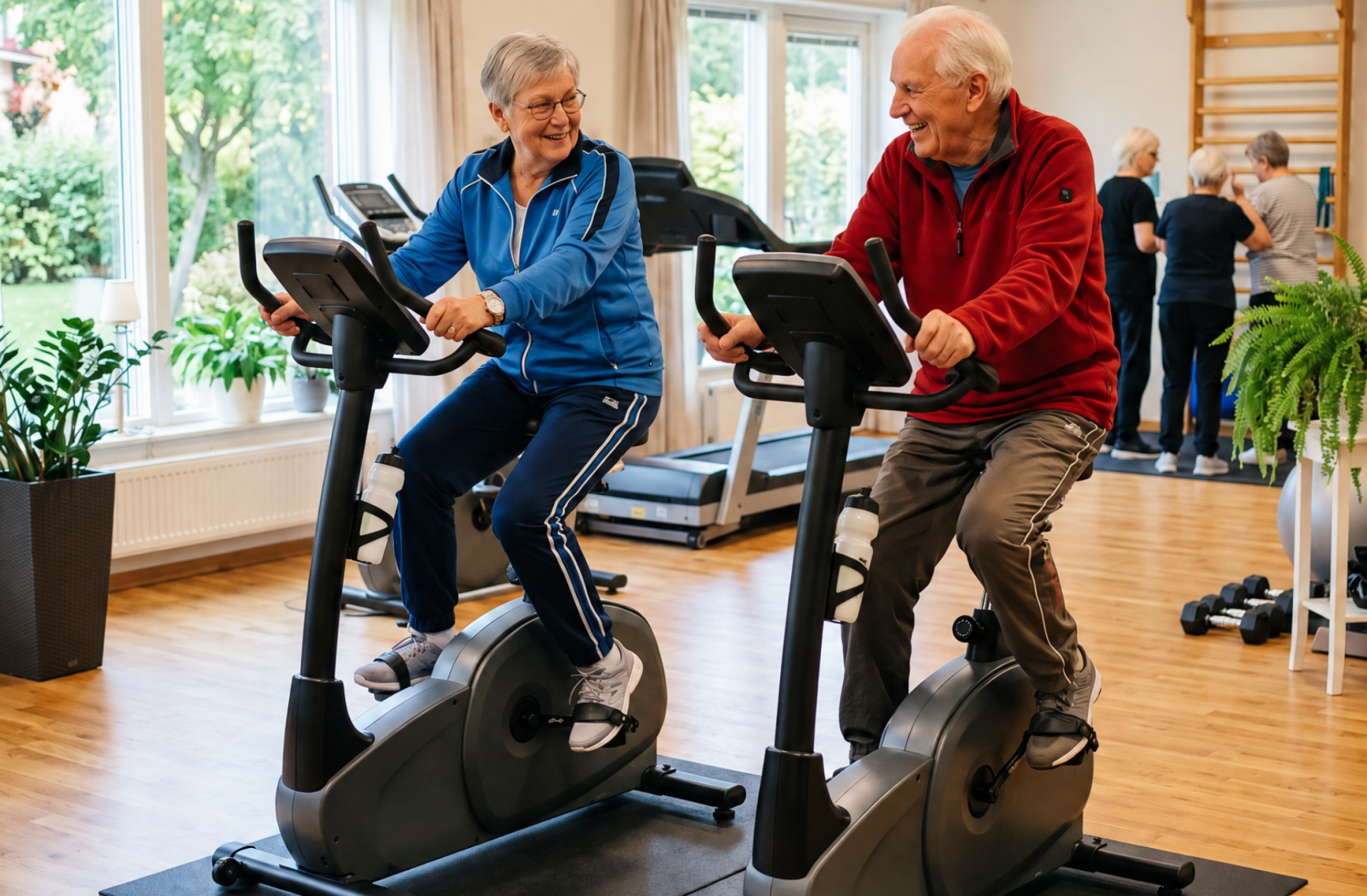
Healthy ageing also has a social dimension. Relationships, meaningful activities and a sense of belonging can shape how people experience everyday life.
The WHO identifies social isolation and loneliness as important determinants of health. Its estimates indicate that approximately 11.8% of older people globally experience loneliness, with social isolation and loneliness associated with effects on physical and mental health, quality of life and longevity.
These figures describe a global issue rather than the circumstances of every care home. Nevertheless, they highlight why opportunities for social connection deserve attention in residential care.
Social engagement can take many forms, depending on individual preferences and abilities. It may include talking with family, joining a group activity, enjoying cultural programmes, participating in hobbies or keeping up with community events. Care providers can help create opportunities for these interactions without assuming that every resident wants the same kind of engagement.
Digital communication can support these efforts by making information easier to access and helping residents maintain contact with people outside the facility. However, simply providing a device does not automatically reduce loneliness. Technology is most useful when it enables meaningful interaction and complements a broader approach to resident wellbeing.
Resident engagement is sometimes understood primarily as participation in organised activities. In practice, it also includes the small decisions that allow people to remain involved in their own lives.
A resident may want to check the day's menu before choosing a meal, see which activities are taking place, read local news, watch a favourite programme or contact a family member independently. Access to information can help support these choices.
When information is difficult to find, residents may need to rely on staff to answer routine questions or explain what is available. A well-designed digital communication channel can make some information more accessible while leaving staff available for the personal support and care residents need.
This approach reflects the WHO's emphasis on person-centred and integrated care for older people, which responds to individual needs, preferences and functional abilities.
The objective is not to digitise every interaction. It is to give residents more opportunities to participate, make choices and access information in ways that work for them.
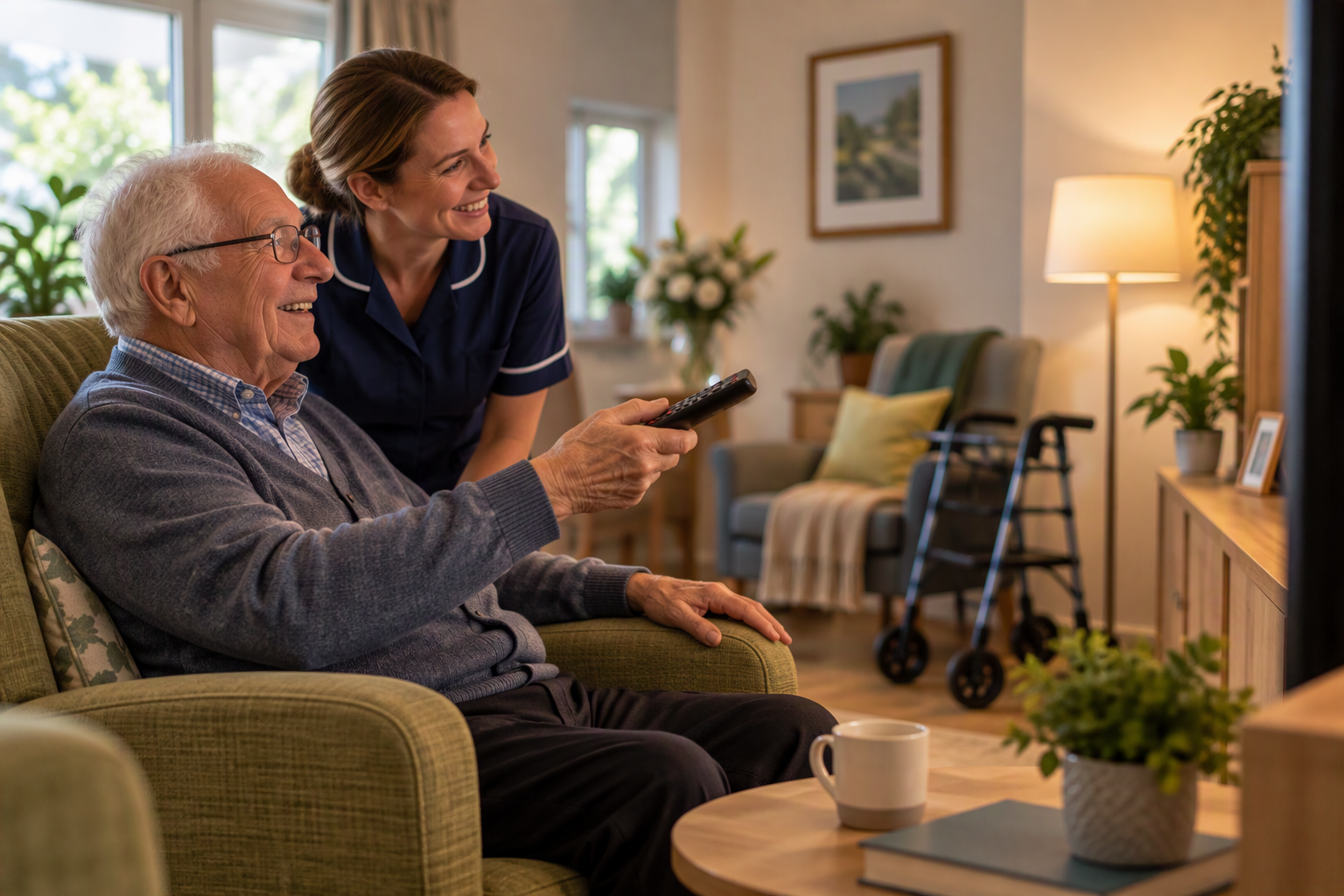
Older adults have different levels of mobility, vision, hearing, cognitive capacity and digital confidence. A digital service that is easy for one person to use may be difficult for another. Accessibility should therefore be considered from the beginning, rather than added after a system has been implemented.
Interfaces should be easy to navigate, text should be readable, and essential information should be presented clearly. Where possible, residents should have suitable alternatives when a particular device or interaction is not appropriate for them.
Technology designed specifically for care environments can help address these needs. Binero and Hibox's Smartroom Care solution brings information, entertainment and communication to managed TVs and displays in residential and elderly-care settings. Staff can provide messages and reminders through in-room screens or tablets, helping make relevant information available where residents spend their time.
Binero and Hibox's CareCall service is designed to help residents stay connected with family and friends through supported devices, including managed TVs, bedside terminals and tablets provided by the care organisation.
These capabilities can make communication easier to access. Their actual value depends on how the technology is implemented, whether residents can use it comfortably and how it complements existing care practices.
Resident engagement depends heavily on care staff, who understand residents' needs and provide the assistance required for participation. Digital technology should support their work rather than create another disconnected system to manage.
Centralised content management, for example, can help staff update information across individual displays, groups of rooms or an entire facility. Routine messages, activity schedules and reminders can be delivered through a consistent channel, while staff remain available for direct communication and personal support.
Binero and Hibox's residential-care solutions combine resident-facing displays with centrally managed information and communication functions.
For care providers, the important question is not how many screens or devices have been installed. It is whether the technology helps residents access information, participate in activities and maintain connections, while fitting into staff workflows.
Implementing digital technology does not automatically improve resident wellbeing. Care providers should establish clear objectives and assess whether the implementation makes a meaningful difference.
For example, if the goal is to make activities more accessible, providers can evaluate whether residents know more about the schedule and whether participation changes. If the goal is to support family communication, they can examine whether residents can initiate or maintain contact more easily. If the aim is to improve access to information, they can ask residents and staff whether it has become simpler to find what they need.
Useful measures may include:
These measures should be interpreted in context. Changes in participation or communication cannot automatically be attributed to technology, because staffing, resident health, programme quality and other factors also influence outcomes. The aim is to understand what works in each care environment and adapt when necessary.

No single intervention can guarantee healthy ageing. Physical activity, nutrition, clinical care, social connection, meaningful participation and suitable environments all play a role.
Digital technology can support some of these areas by improving access to information and communication. It cannot replace a care worker, make every resident feel connected or substitute for a well-designed activity programme.
For Binero and Hibox, the role of resident-facing technology is to help create a more connected care environment. Its solutions for elderly care offer one way to bring communication, information and entertainment into residents' everyday surroundings.
The broader point is that health is not shaped only during a clinical encounter. It is also influenced by the environment residents experience throughout the day.
Healthy ageing starts long before the doctor walks in. It is supported by the opportunities people have to move, connect, participate and make meaningful choices in daily life.
We are driven by helping our customers achieve greater innovation and cost-efficient IT. Talk to one of our experts and we will gladly tell you more.